Business Intent
Objectives • Constraints • Context • Risk Appetite

TECHNOLOGY
Quantitative computation, specialised agents and executable knowledge. Connected in one enterprise architecture.
Explore the technology
WHERE INTELLIGENCE BECOMES INFRASTRUCTURE.
Objectives • Constraints • Context • Risk Appetite
Quantitative Intelligence Engine
Models • Simulation • Forecasting • Optimisation • ValidationPrompts • Skills • Components • Functions • Tools
Agents • Multi-agent Workflows • Human-in-the-loop
Traceable • Auditable • Explainable • Actionable
DESIGNED TO REASON. BUILT TO EXECUTE. ENGINEERED TO BE AUDITED.
QUANTITATIVE COMPUTATION
MatrixC is Proxima Alpha’s computational engine for advanced modelling, simulation and optimisation. It brings mathematical rigor into operational decision workflows, allowing complex scenarios, constraints and quantitative relationships to be analysed within a common execution environment.

AGENTIC ORCHESTRATION
Proxima Alpha orchestrates specialised AI agents across research, analysis, reasoning and execution. Each agent contributes a defined capability while the orchestration layer coordinates context, dependencies and task progression across complex multi-step workflows.
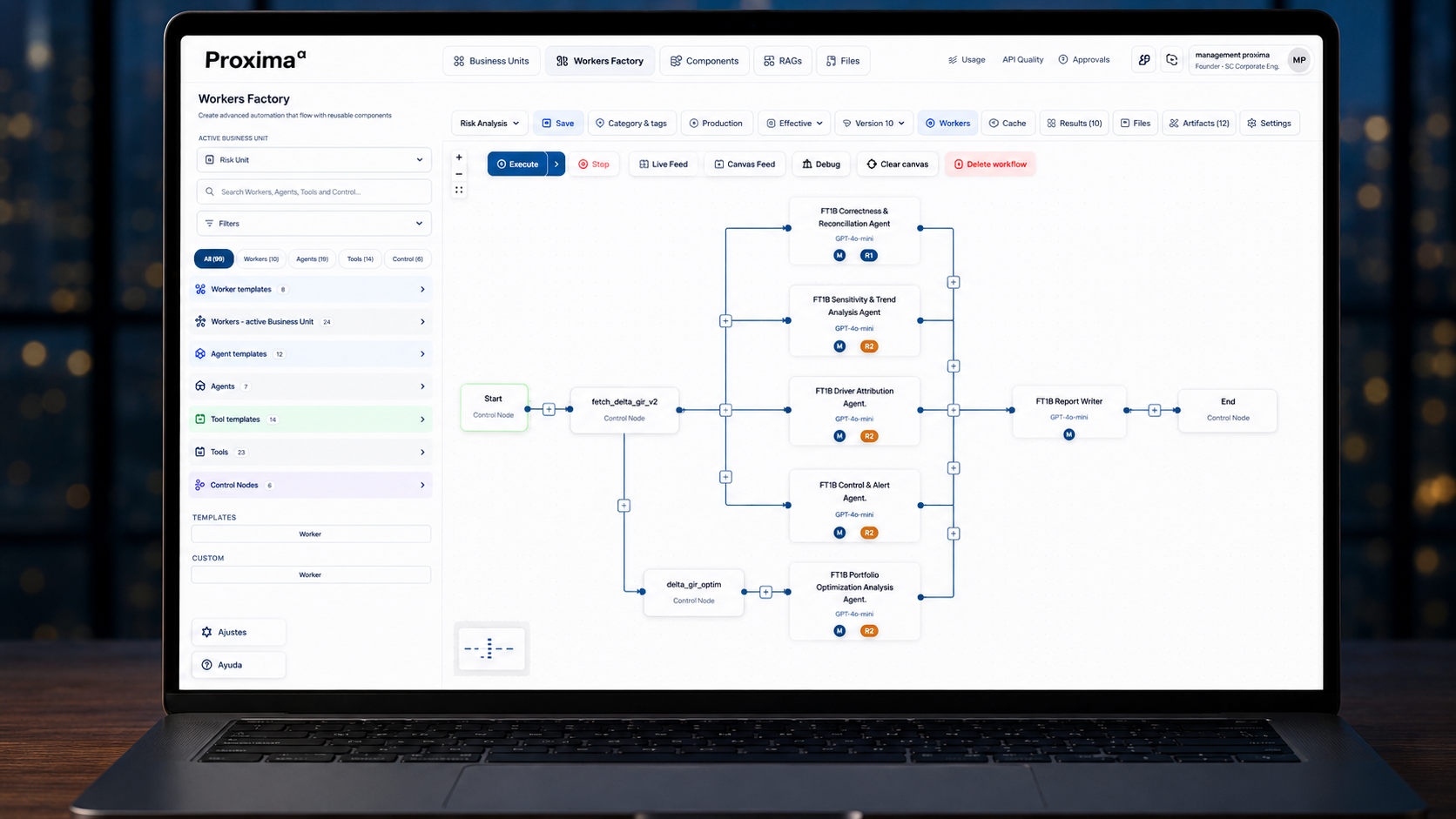
EXECUTABLE INTELLIGENCE
Prompts, skills, components, functions and domain knowledge are structured into reusable operational capabilities. Instead of merely retrieving or describing expertise, the architecture turns defined knowledge into actions the system can perform, combine and reuse across analytical workflows.
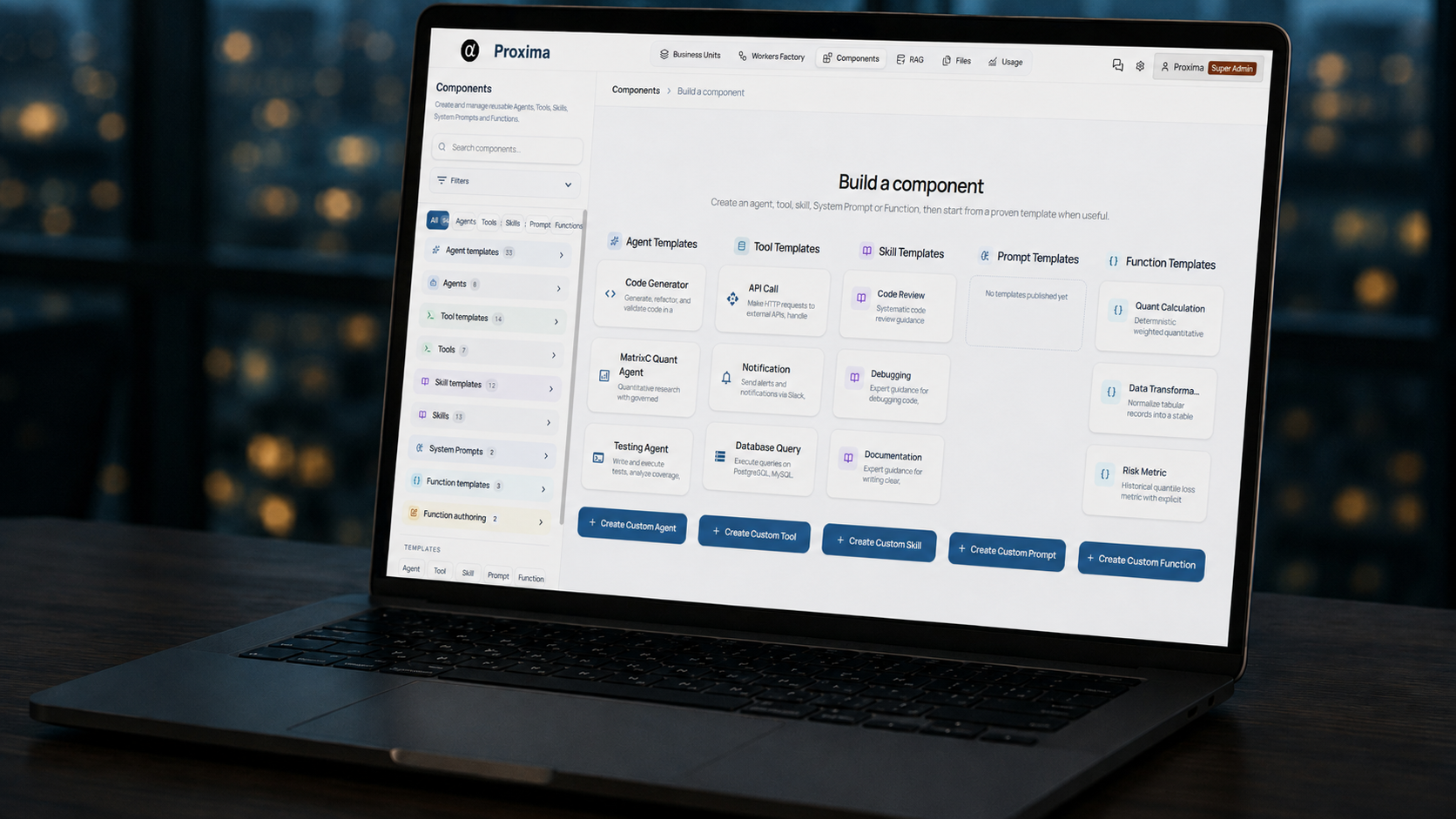
ENTERPRISE INTEGRATION
Proxima Alpha interfaces with data, models, APIs, analytical tools and enterprise systems so intelligence can operate inside existing workflows rather than outside them. The result is a technology layer designed to work with the organisation’s real operational environment.
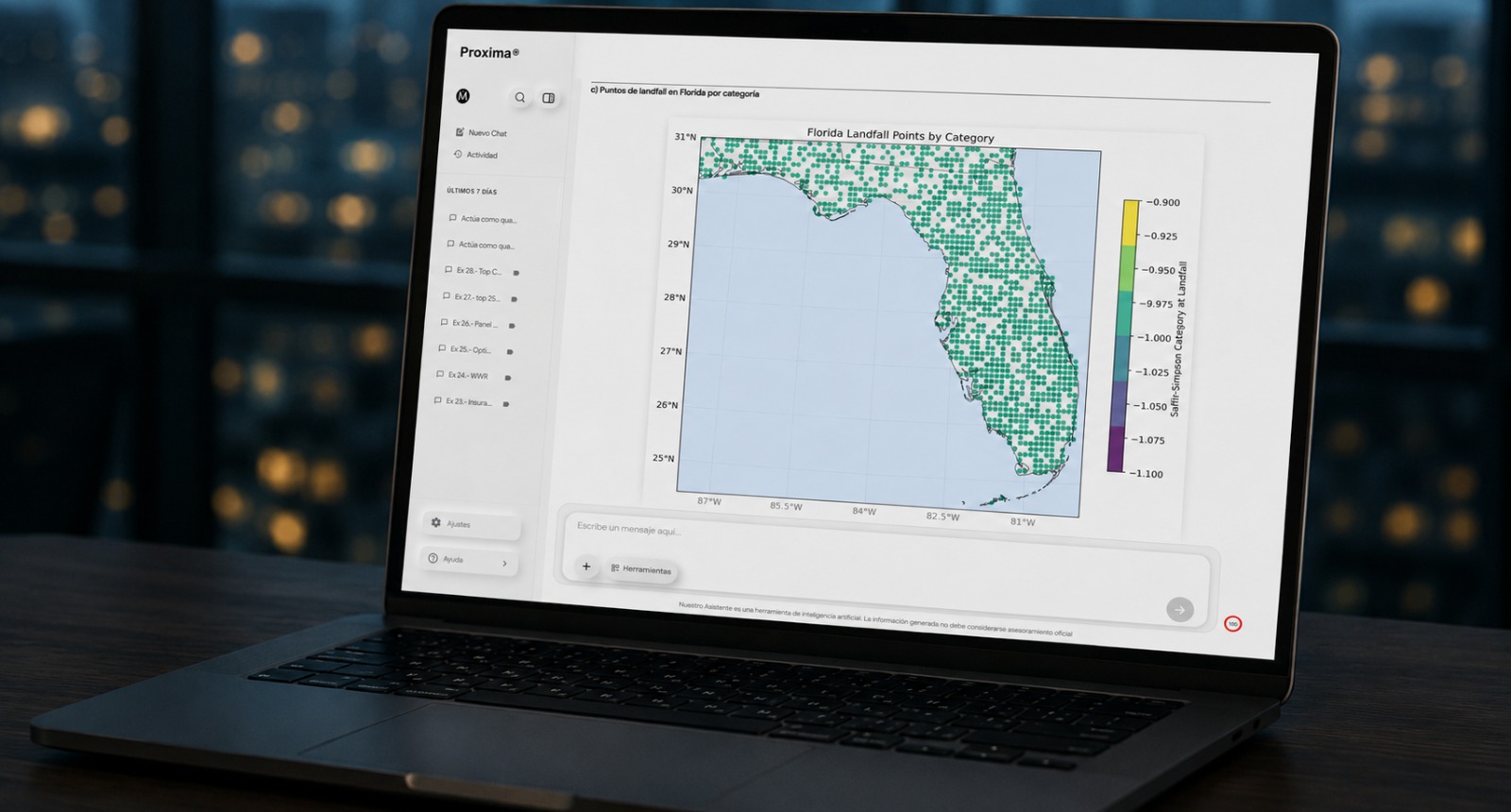
AUDITABILITY & TRACEABILITY
Critical inputs, analytical stages, validation activity and outputs can be traced across the execution lifecycle. This creates a reviewable evidence trail that supports verification, accountability and a clearer understanding of how important results and recommendations were produced.

GOVERNANCE BY DESIGN
Permissions, human oversight, validation mechanisms and governance controls are incorporated throughout the architecture. This allows advanced AI and quantitative capabilities to operate within defined enterprise responsibilities, approval structures and compliance requirements.