
Overview
This use case applies the SMASH framework to connect corporate strategy, execution priorities and external market conditions with shareholder-value outcomes. The workflow structures a company's strategic agenda into a hierarchy of expectations, internal strengths and external factors, and then links that hierarchy to measurable financial outcomes such as market capitalisation.
The purpose is to move beyond qualitative strategy documents and create a decision framework in which strategic initiatives can be mapped, scored, compared and tested against observable market performance. The model combines a hierarchical strategic representation with predictive analysis, allowing management to see both how value is expected to be created and whether that logic is consistent with subsequent changes in market value.
Business relevance
- Translate a complex corporate strategy into a structured hierarchy of value drivers.
- Connect internal execution priorities and external market factors to shareholder-value outcomes.
- Compare predicted and realised market capitalisation to test whether the strategic model is economically informative.
- Prioritise strategic initiatives according to their expected contribution to value creation.
- Support executive planning, portfolio-of-initiatives decisions and board-level strategy reviews.
Solution
The solution is to use SMASH as a strategic-value steering system rather than as a static strategy map. Figure 1 tests whether the framework has economic relevance by comparing predicted and realised log market capitalisation out of sample. The predicted series does not reproduce every short-term movement, but it follows the broad direction of the observed market-value path across much of the period. Where the two lines diverge, management gains a concrete signal that either market expectations have changed faster than the strategic model or that important external factors are not yet being captured.
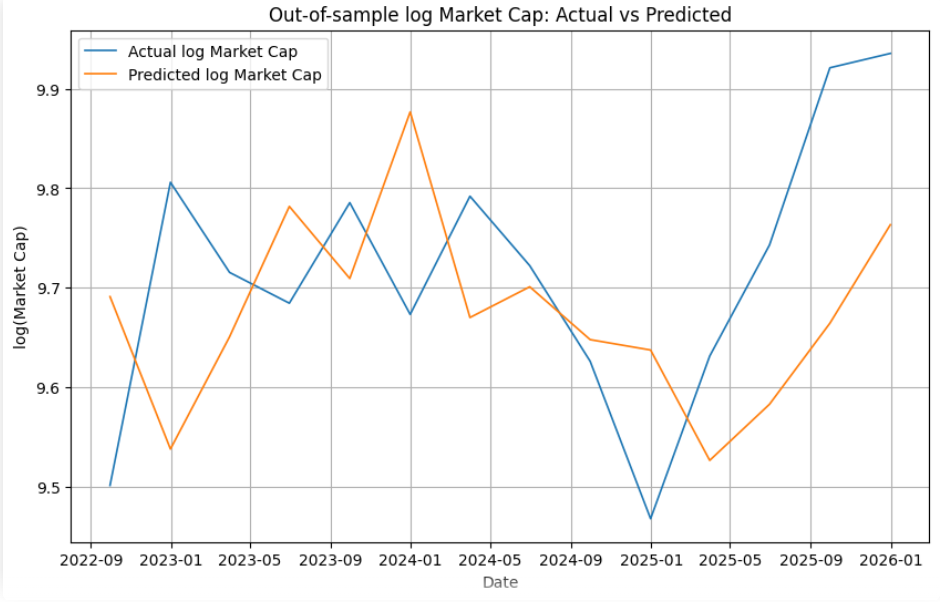
Figure 2 provides the management layer behind that forecast. The sunburst decomposes SMASH into a hierarchy of strategic expectations, company strengths, execution capabilities, managerial effectiveness and external factors. The relative size of each segment makes the value logic visible: management can see which branches of the strategy carry the largest assigned contribution and which sub-initiatives sit underneath them.
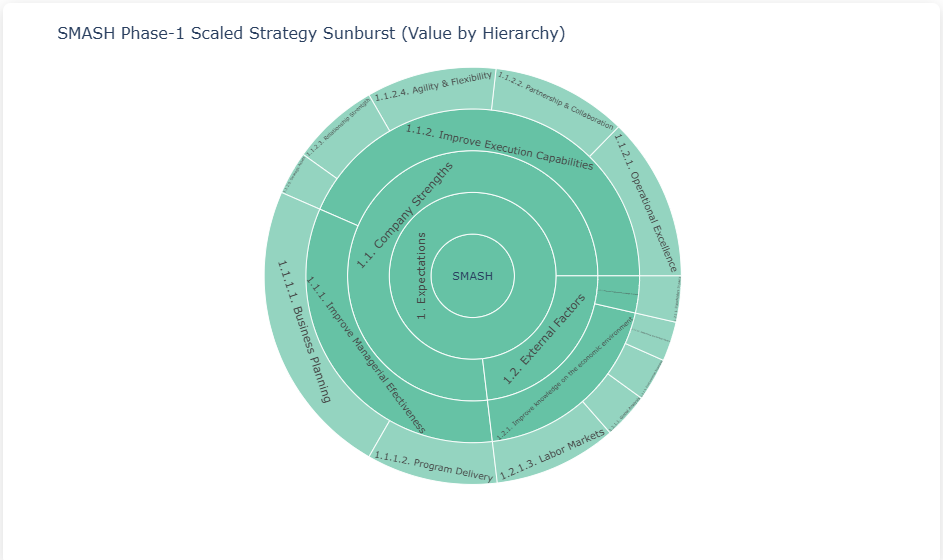
Used together, the two figures create a closed strategic loop. Figure 2 explains where management believes shareholder value should come from; Figure 1 checks whether the resulting model is consistent with realised market value. This allows executives to challenge underperforming strategic branches, reweight initiatives when external conditions change, identify where the model is systematically missing market movements and concentrate capital and management attention on the initiatives with the strongest expected impact on shareholder value.